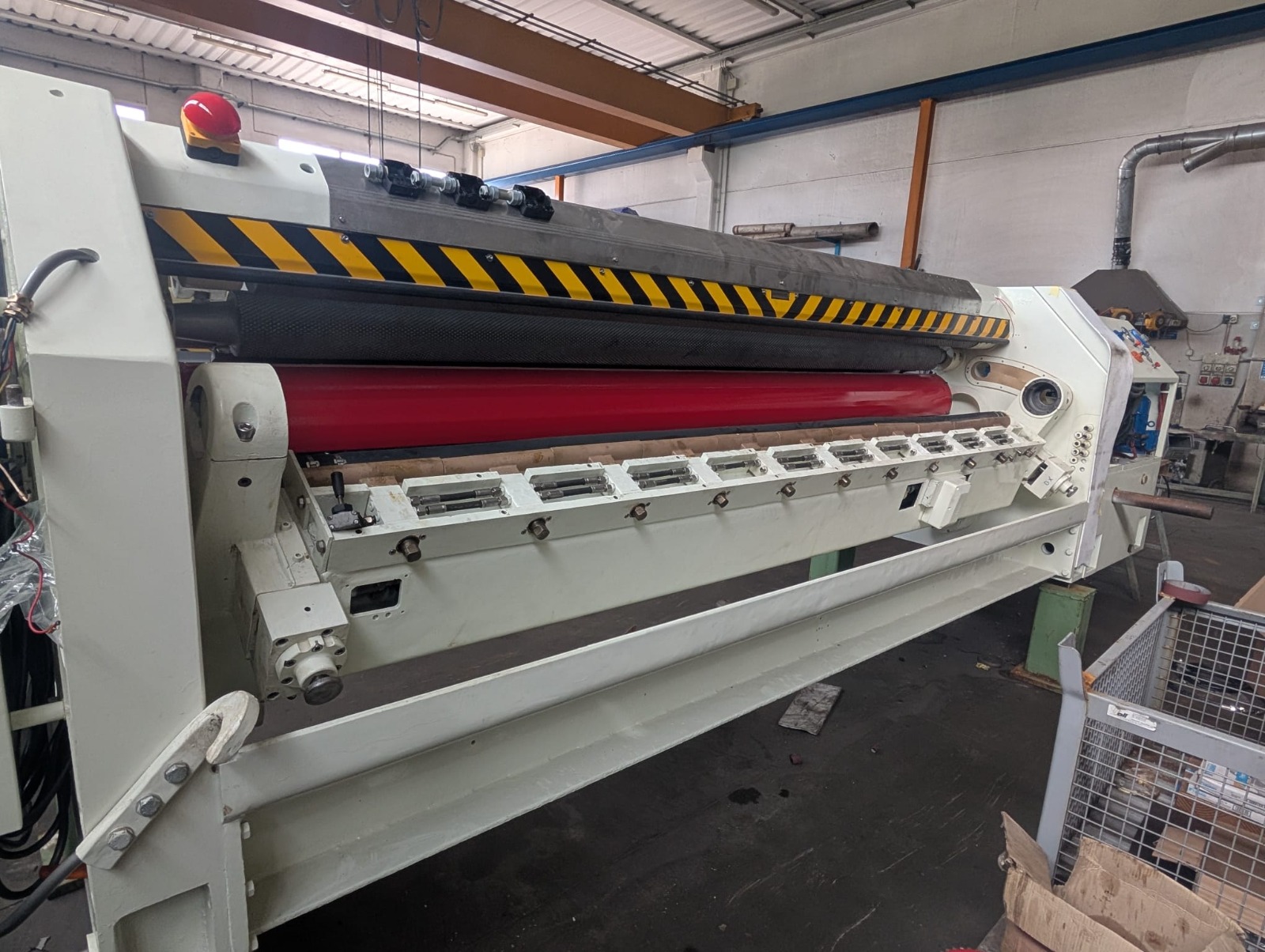
It arrived oxidized, paint peeling off the frame, pins and bushings worn past tolerance, an electrical panel that hadn't been touched in years. Most people looking at this Poletto S 3200 fleshing machine (serial S408) would have called it scrap and started shopping for a replacement. We saw a machine that needed thirteen things done right, not one thing done over.
Why Machines Like This Get Written Off
When a machine looks this rough, the instinct is to replace it. I understand why: a rusted frame and a tangled electrical panel signal "end of life" faster than any spreadsheet, and nobody wants to bet a production line on something that looks like it belongs in a scrapyard. But surface condition and mechanical condition are two different questions, and they rarely move together. In my experience, what actually determines whether a machine is worth reconditioning is the state of the load-bearing components — shafts, bearings, pins, bushings — not the paint on top of them. A tannery that scraps on sight, without opening the machine up first, is often paying full capex for a problem a proper teardown would have fixed at a fraction of the cost. The paint is the easiest thing to judge and the least useful signal you have.
What a Full Overhaul Actually Involves
On this unit, the answer was: everything, methodically. Full teardown, sandblasting and repainting of the frame. Worn shafts, pins and bushings replaced on the bed, sharpener and bolster. The blade roller was reground, the rubber roller recovered, the conveyor rollers serviced — three roller groups rebuilt with new bearings and chains. The hydraulic tank was cleaned, hoses and O-rings replaced, with a new separate circuit for the bolster. The electrical panel was inspected, wiring and sheathing rebuilt 100%, new photocells and control panel installed, plus a centralized lubrication system with two greasing points.
That's not a repair. That's thirteen distinct areas of the machine brought back to spec:
- Frame, bed and rollers rebuilt with new bearings, pins and bushings throughout
- Hydraulic system cleaned, resealed and reconfigured with a separated bolster circuit
- Electrical system rebuilt from the panel out — wiring, sheathing, safety components
A machine this thorough about its own overhaul doesn't come back into a tannery as a compromise — it comes back as new.
What This Means for Your Tannery
If you're sitting on a machine that looks too far gone to save, the honest answer is usually: it depends on what's underneath the rust, not what's on top of it. A proper assessment — checking shafts, bearings, the electrical core — tells you in a day whether reconditioning saves you a capital purchase or whether it's genuinely time to replace. We recondition tannery machinery end to end: mechanical, hydraulic, electrical, exactly as we did here. It's the CAPEX angle most tanneries don't run the numbers on until someone shows them what a full overhaul actually costs against a new machine quote — and how much production time it saves versus waiting on a new unit's lead time.
A stopped machine isn't scrap. Often, it's just waiting for someone willing to open it up and do the work properly.
If you have a machine standing still in your plant and you're not sure whether to fix it or replace it, write us at info@kymeragroup.it.